zondag, februari 19, 2006

Printing huge posters

I recently needed a huge poster of one of my own pictures. Luckily, on a GNU/Linux system, all the software you need for doing so, is already available and just works.

Here's the commands needed to convert a picture called "mypicture.jpg" to a big poster in a Postscript file called myposter.ps:

convert mypicture.jpg mypicture.ps
poster -mA4 -p4x4A4 mypicture.ps >myposter.ps

The parameter -mA4 selects the paper size you want to print the poster with. The parameter -p4x4A4 sets the poster size as being 16 A4 pages.

You can print using whatever printing application you like, be it lpr on the commandline or a graphical application such as Evince on GNOME systems (such as the Ubuntu Breezy system I am using).

maandag, februari 06, 2006

Migrated my repositories

I've recently migrated my repositories to a new hosting provider. The Breezy repository is available at http://issaris.be/breezy and my new Maemo repository
with packages for the Nokia 770 is available at http://issaris.be/maemo.

maandag, januari 30, 2006

Nokia 770 OSGi

These screenshots show a Nokia 770 with the Oscar OSGi implementation running on top of the JamVM Java virtual machine and GNU Classpath classlibraries.


screenshot02

Starting the bundle

Stopping the bundle

maandag, januari 23, 2006

Transcoding video for the K750i

This works fine for me:
ffmpeg -i sourcevideo.avi -s qcif -b 256 -acodec aac -ab 128 -ac 2 targetvideo.mp4

ffmpeg -i sourcevideo.avi -s qcif -vcodec mpeg4 -acodec aac -r 20 -b 192 -ab 96 -ac 2 -ar 44100 targetvideo.mp4

donderdag, januari 19, 2006

Ubuntu Breezy bug

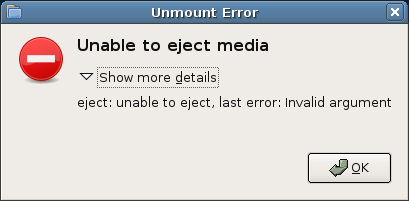
When unmounting an external USB drive by clicking on the drive's icon and choosing "unmount volume",
the following error-message appears:


And, the strange thing is, the drive is apparantly unmounted, as there is no trace of it in either, mount or df's output.

woensdag, januari 18, 2006

Nokia 770

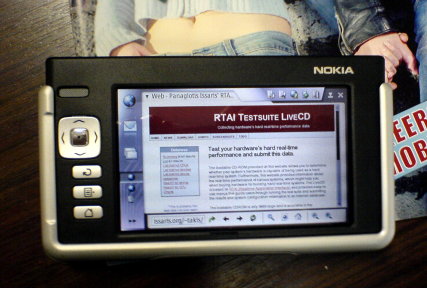
I have been playing with the ultra-cool Nokia 770! :)

Here's a pic of my RTAI LiveCD website rendered with the browser on the device (Opera).

Puppy for mom


We bought a cute little Cavalier King Charles Spaniel puppy for my mom:

maandag, januari 16, 2006

Repository moved

Due to unstability of the server that previously hosted my repository, I've moved my Ubuntu Breezy repository. The new line to add to your /etc/apt/sources.list would be:
deb http://alpha.uhasselt.be/takis.issaris/breezy/ ./

vrijdag, januari 13, 2006

E17 screenshots

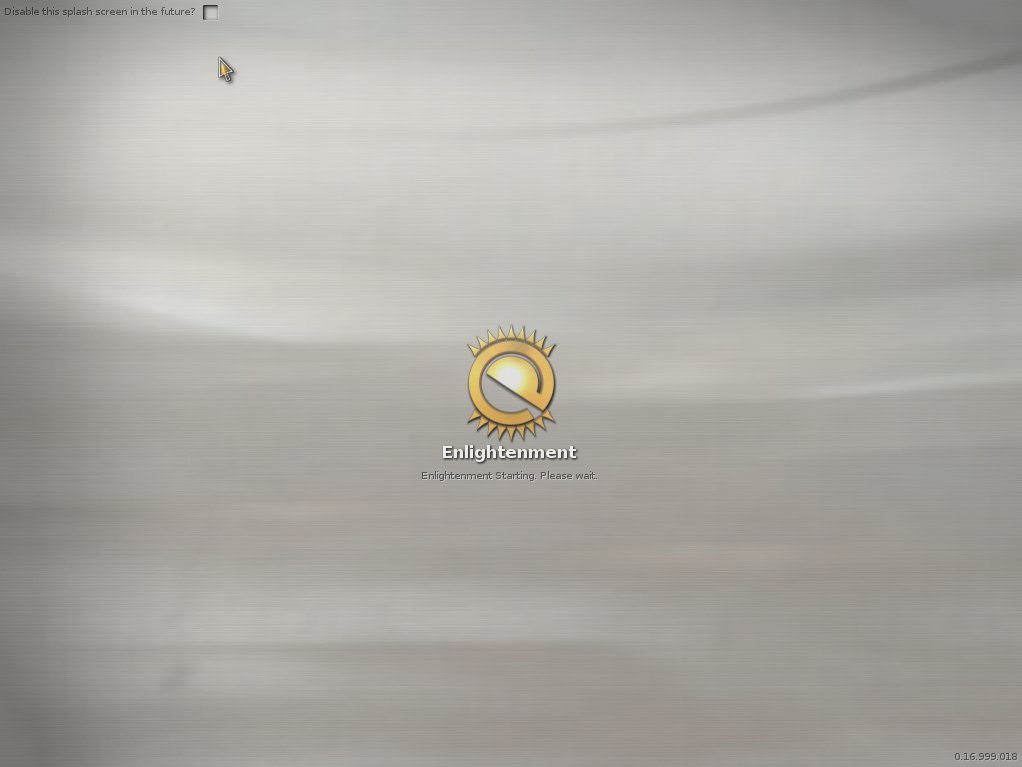
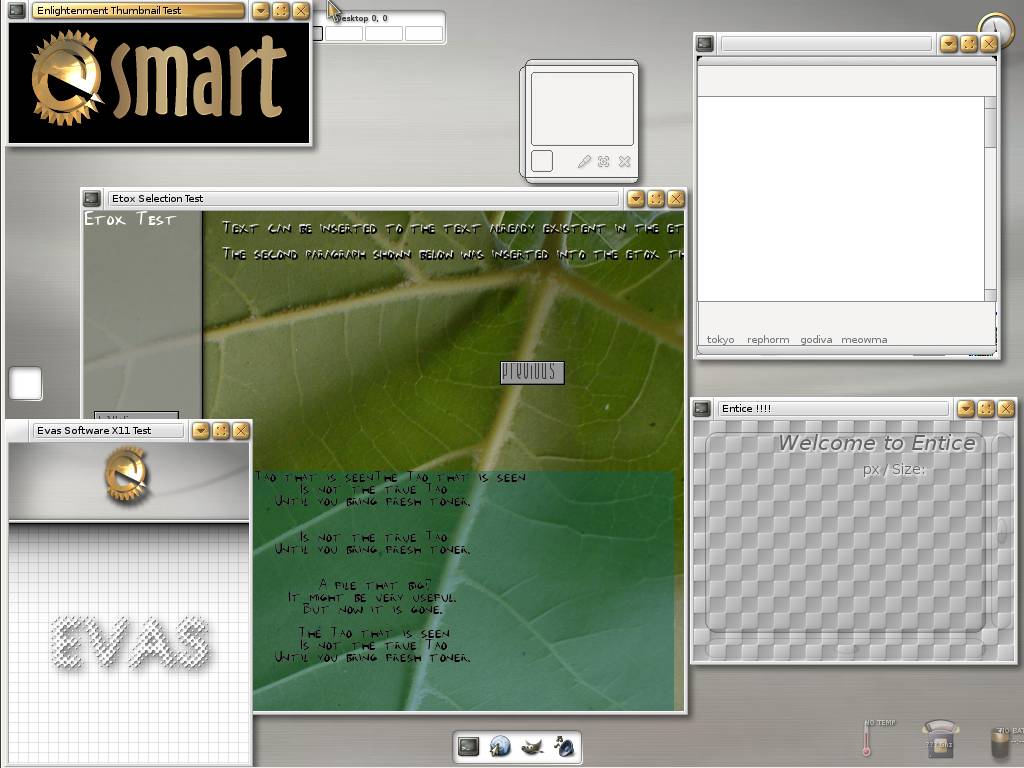
Some screenshots of current Enlightenment 0.17's CVS code.


E17 starting...


Various apps available in the E17 CVS repository:


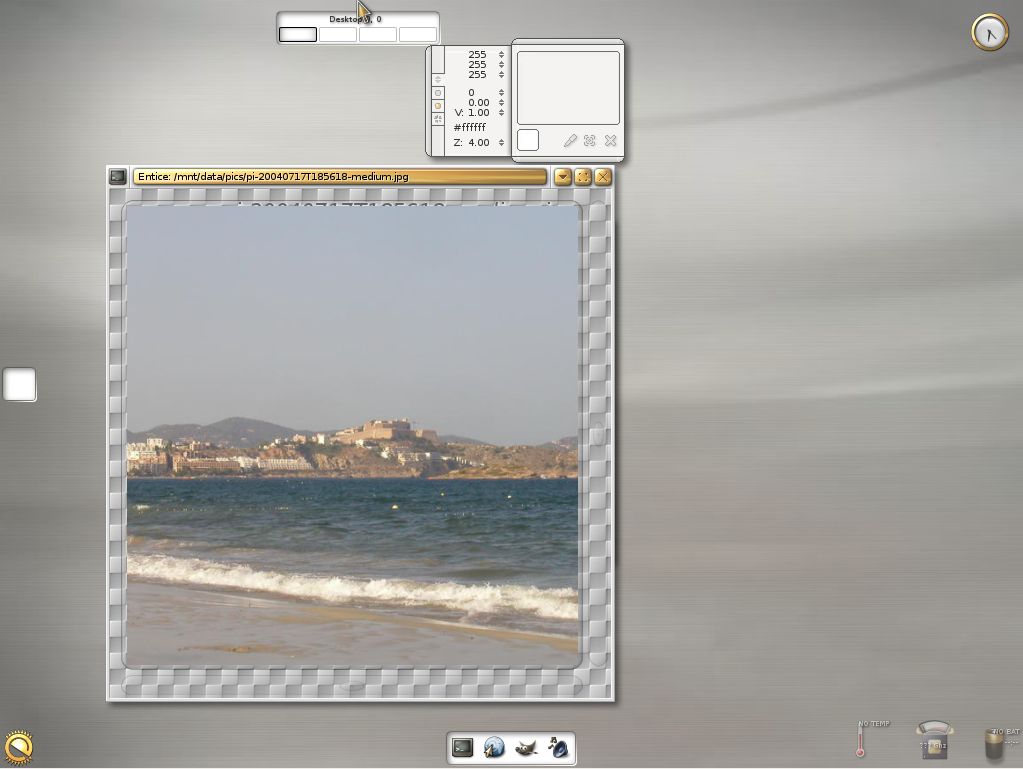
Entice, a image viewer using the E17 libs:

GIT CVS import Ubuntu Breezy package

Added a cvsps 2.1 package to the repository as Ubuntu Breezy still ships with 2.0rc1. Version 2.1 is needed for GIT's CVS import functionality.

woensdag, januari 11, 2006

UM Linux HOWTO

This is a short howto, explaining how to setup User Mode Linux for simple Linux kernel module development and experimentation. I'm using the current Linux kernel 2.6.15 version (actually, todays GIT tree :) )

I like to keep my filesystem structure nice and clean, which is why I tend to use multiple partitions and directories for separate things. I've got a /usr/local/src directory which contains the linux-2.6 subdirectory contains the Linux kernel sourcecode. All my builddirectories are stored in /mnt/build, and so the first thing to do is to create a new entry for the Linux 2.6 UML build:
mkdir /mnt/build/linux-2.6-um

Next, enter the Linux kernel sourcecode directory:
cd /usr/local/src/linux-2.6

We'll start from the default UML configuration file for the kernel:
cp arch/um/defconfig /mnt/build/linux-2.6-um/.config

Use the defaults from that default config file:
make oldconfig ARCH=um O=/mnt/build/linux-2.6-um/

In case there's anything you want to change in the configuration of the UML kernel, start
the configuration menu:
make menuconfig ARCH=um O=/mnt/build/linux-2.6-um/

Now, we're set to do the actual building of the kernel. This will take a while...
make ARCH=um O=/mnt/build/linux-2.6-uml/

We need a disk image for the UML kernel to use. So, we'll create one. There's many ways to do this, this is a rather simple one.

First create an empty file which will kind of represent a disk drive (or actually a partition on a diskdrive):
dd if=/dev/zero of=/usr/tmp/sarge.ext2 bs=1M count=500

Put a filesystem on this partition, ext2 is fine for such a simple development system:
mkfs.ext2 /usr/tmp/sarge.ext2

Mount the filesystem image using loopback:
mount /usr/tmp/sarge.ext2 /mnt/loop/ -o loop

Copy an existing Linux distribution in this mounted filesystem image:
cp -var /usr/chroots/sarge/* /mnt/loop/

Move into the mounted filesystem and create the needed device nodes for UML:
cd /mnt/loop/dev
./MAKEDEV ubd

Next we'll install the kernel modules into the mounted filesystem:
cd /usr/local/src/linux-2.6
make modules_install O=/mnt/build/linux-2.6-uml ARCH=um INSTALL_MOD_PATH=/mnt/loop/

And finally, umount the filesystem image:
umount /mnt/loop/

Make a link named root_fs to your new partition image:
cd /usr/tmp
ln sarge.ext2 root_fs

Start the new UML kernel (and in this case, skip the default initscripts to get a real quick boot):
/mnt/build/linux-2.6-uml/linux init=/bin/bash

On the host system, create a directory for sharing files with the guest:
mkdir /tmp/forguest

In the guest system, mount this:
mount none /tmp -t hostfs -o /tmp/forguest

Now, any file appearing on the host system in /tmp/forguest, will also appear within the guest system in the /tmp directory.


Write whatever kernelmodule code (which doesn't actually access hardware since we're using UML)
you want in the /tmp/forguest directory.

Execute the following command once:
make -C /mnt/build/linux-2.6-uml/ modules ARCH=um

Build the module with the following command:
make -C /mnt/build/linux-2.6-uml/ SUBDIRS=$(pwd) modules ARCH=um

From the guest system, load the kernel module using:
insmod ./mymodule.ko

Remove it with:
rmmod mymodule

That's it! :)

dinsdag, januari 03, 2006

Linux 2.6.15 released!

Fifteen years after Linus Torvalds bought the machine which got Linux started, version 2.6.15 of his kernel has been released! :)

Added an Ubuntu Breezy image to my repository. Compiled for 686, with the default 686 ubuntu kernel configuration (thus most modules/drivers are available).

And, as I'm using an NVIDIA card here, I've added the NVIDIA kernel driver package too. It's not the current NVIDIA version, but the version included in Ubuntu Breezy (7667) recompiled for the above kernel.

Linux 2.6.15 Breezy kernel package
NVIDIA 7667 driver for the above 2.6.15 Breezy kernel

dinsdag, december 20, 2005

A quick glance at E17

Those interested in having a look at E17 but not willing to actually start using it, can use the following command to see E17 in a nice little window:
Xnest -ac :1 | enlightenment -display :1

You need to have the xnest package installed or you can install the xserver-xephyr package and use:
Xephyr -ac :1 | enlightenment -display :1


Totally OT: Qemu 0.8.0 is available now! Lots of new features! :-)

MPlayer and accompanying browser plugin

I've added MPlayer and Mplayerplug-in Debian packages to my Ubuntu Breezy repository. They are current snapshots of the CVS repositories. MPlayer can play nearly all audio and video files you can find, and the accompanying plugin makes those playable from within your browser.

apt-get install mplayerplugin

vrijdag, december 16, 2005

Libjingle and E17

Google introduced a new project called Jingle earlier today. I just added Ubuntu Breezy packages of this new stuff to my repository.

Furthermore, I added E17 CVS packages. These should be built automatically using a cronjob.

All goodies available here:
deb http://lumumba.uhasselt.be/takis/breezy ./

woensdag, december 07, 2005

More Debian packages

I've added more packages to my Ubuntu Breezy repository. Besides snapshots of the standard GIT tools and Cogito, I've added qgit, JRTPLib, UIML.Net, Cassowary.Net, XMLRPC for C#, and the WxWidgets .Net bindings.

GIT world domination

The Wine project has just started using GIT! This is the second large/huge project using Linus' Torvalds version control system.

What's incredibly neat is that they've put up the entire project history into the repository starting from 1993! Have a look over here at the webinterface.


The Wine people have put up a Wine GIT Wiki to get people started using GIT. For those interested in using GIT, Jeff Garzik's GIT HOWTO makes an interesting read.


In related GIT news: Artem Khodush wrote a webbased GIT browser.

maandag, december 05, 2005

GIT and Cogito snapshots

I've made some GIT and Cogito snapshots available for Ubunty Breezy. The packages are created from a script invoked by cron, daily.

deb http://lumumba.uhasselt.be/takis/breezy ./

woensdag, november 09, 2005


The 28th of October me and my girlfriend went for a walk in the woods. There are lots of markings in the woods, of different colours representing different routes. The idea was to take a route which would be about 5km and we should complete it in an hour or so. So, we took the orange route, which was 5.5km. Three and a half hours later we finally got out of the forrest... :-) Some kids had apparantly moved some of the markings...

dinsdag, november 08, 2005

CVS to GIT and back

The first step is to import a CVS tree into GIT:

mkdir foobar.git
cd foobar.git
git-cvsimport -p x -v -d :ext:takis@cvs.sourceforge.net:/cvsroot/someproject foobar


We will not make any modifications to the project in that directory, this directory is purely intended to be a GIT conversion of the CVS repository. Instead, we'll create a clone of that archive and do our hackery in there:


git clone -l foobar.git/ foobar-pi.git/


The "l" flag makes sure that git uses hard links instead of copying files, if possible.

Next, we'll make some modifications to the project and commit them using git-commit or cg-commit. As said earlier, we'll make those modifications in the foobar-pi.git directory:

cd foobar-pi.git
... do stuff ...
cg-commit


If new changes are committed in the CVS repository, we need to fetch those in our foobar.git repository, which is kind of a GIT mirror of the online CVS repository.


cd foobar.git
git-cvsimport -p x -v -d :ext:takis@cvs.sourceforge.net:/cvsroot/someproject foobar


Now, we'll pull in the CVS-commits to the clone directory.

cd foobar-pi.git
git pull


This results in a way to have a nice GIT repository of a project being hosted using CVS. Your GIT repository makes it easy to view changes in the project as you've got the full history locally on your system.

To prepare you modifications to be send as a patch, do the following:

git-format-patch origin..HEAD


This will give you a set of files, containing patches, which you can post to a mailinglist or maintainer.

If you've got write access to the CVS-repository, you probably want to commit these patches back into the CVS yourself. To do this, checkout the CVS repository somewhere on your filesystem:

export CVS_RSH=ssh
...


Get into the CVS working directory, and set the environment variable GIT_DIR to point to the .git directory within your git directory:

export GIT_DIR=/usr/local/src/foobar-pi.git/.git/


View the GIT-logs and select which commits you want to push into the CVS-repository:

git-log


Copy and paste the commit-identifier (being an SHA1-hash) and use it as a parameter to git-cvsexportcommit:

git-cvsexportcommit 4a20cbafdf25a141b31a8333284a332d1a4d6072
unset GIT_DIR


Do not forget to unset the GIT_DIR environment variable!

This will output:

$VAR1 = '4a20cbafdf25a141b31a8333284a332d1a4d6072';
...
Ready for you to commit, just run:

cvs commit -F .msg Uiml/uiml.net.build


Repeat the command shown above:

cvs commit -F .msg Uiml/uiml.net.build


The patch which you wrote and committed in your clone GIT tree, is now committed back into the CVS repository.

Now, you can resync your GIT-CVS mirror tree:

cd foobar.git
git-cvsimport -p x -v -d :ext:takis@cvs.sourceforge.net:/cvsroot/someproject foobar


Now, your patches which you committed in the CVS repository, will be pulled back into the GIT-tree which acts as a mirror of the CVS-repository.

Now, you'll want to merge this back into your GIT-clone tree, which is where you do your actual work:

cd foobar-pi.git
git pull


Now, you've come full circle. You patches which were initially committed in foobar-pi.git, were committed to the CVS tree, and pulled back into the mirror GIT tree (foobar.git) and finally back into your clone/working GIT tree (foobar-pi.git). Ofcourse your patches were already in foobar-pi.git and GIT will notice this.